
Check the old and new subscription prices
Start with the provider's current notice or billing screen. Verify that the change applies to your plan and account. A headline about a different tier, country or billing arrangement may not describe your own next charge.
Record the currency, billing cycle, effective date and any tax treatment you can confirm. Keep an introductory discount separate from the ongoing price. An old promotional rate compared with a new regular rate may explain a large difference without representing a second change.
Use the same billing period on both sides
For two monthly prices, subtract the old amount from the new amount, then multiply by 12 for an annualized comparison. For two annual prices, their difference is already the annual change. If the billing cycle also changes, normalize both plans before comparing them.
| Illustrative change | Difference per bill | Annualized difference |
|---|---|---|
| $10 to $12 monthly | $2 per month | $24 over 12 payments |
| $80 to $92 annually | $12 per year | $12 per year |
| $24 to $27 quarterly | $3 per quarter | $12 over four payments |
These fictional figures show the calculation, not current provider pricing. Annualized difference describes 12 months at the new unchanged rate; it may not be the additional amount you will actually pay during this calendar year. The effective date and any later changes still matter.
Keep timing beside the bigger number
If a monthly change begins partway through the year, the annualized figure is a useful comparison rather than a statement of charges already paid. A yearly plan may keep the old amount until its next renewal. Check the agreement instead of treating the notice date as a charge date.
The renewal calendar can help keep that next date visible. For comparisons across multiple plans, use the subscription-cost calculator with the correct billing cycle for each entry.
Compare the plan you use with the choices available
Before switching, check whether a cheaper tier changes the features you need, adds conditions or requires a different commitment. A lower monthly equivalent may come with a larger annual payment. A free alternative may meet a different need rather than replace the current service directly.
Useful questions are specific: do you use the extra storage, would another household member lose access, and does a current project depend on a paid feature? The answer may be to keep the plan at the new price. The purpose of the review is a deliberate choice, not cancelling every service that changes.
Update the record once you confirm the change
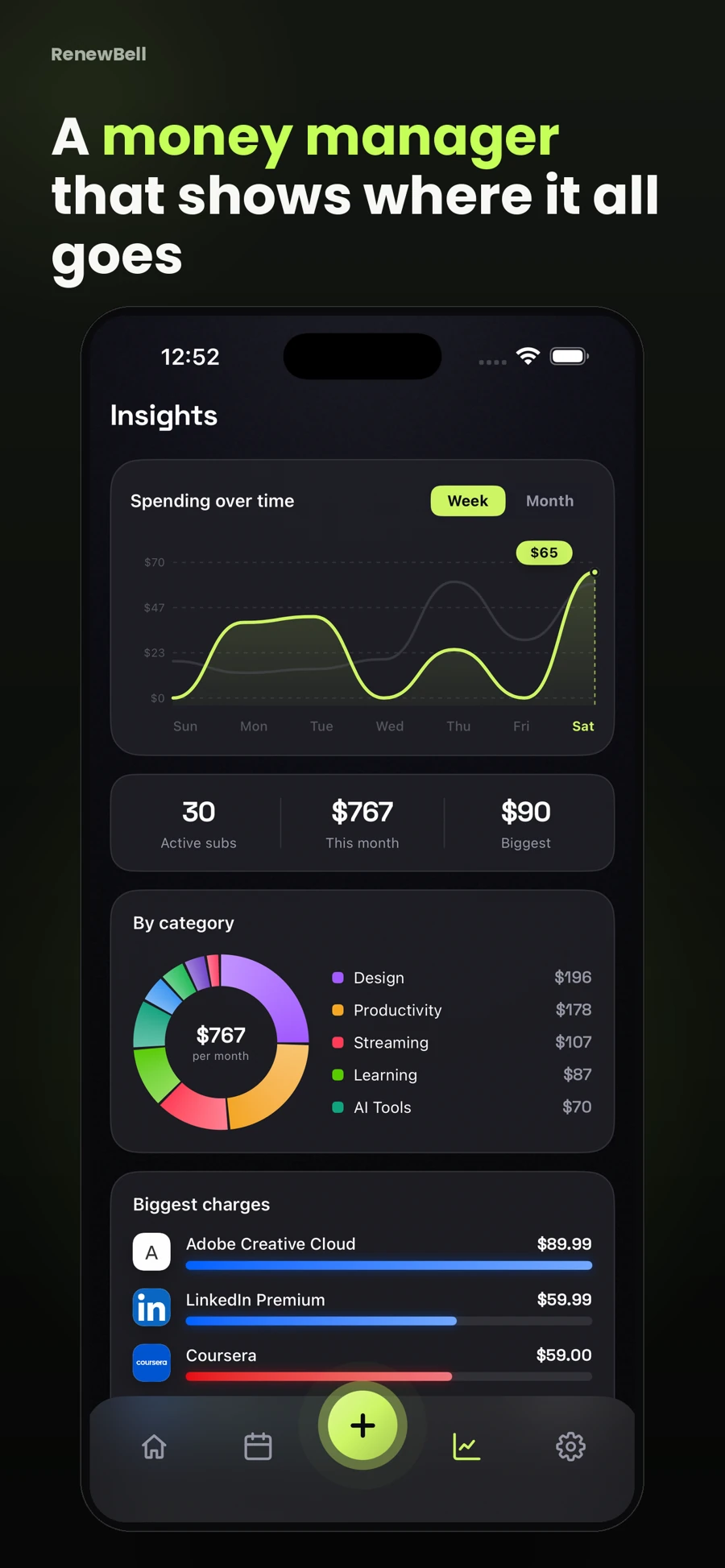
RenewBell's price-increase tracking helps show changes to recorded subscription prices and their impact. It is not continuous monitoring of every merchant's website. An accurate notice or billing record still needs to reach your list.
After changing a tier, cycle or provider, confirm the resulting date and amount before editing the tracker. If you cancel, complete the provider's process first. Any savings figure based on that decision is projected future spending avoided, not a refund already received.
Give changing prices a place in your routine
Add price checks to your weekly subscription review when a notice arrives, rather than repeatedly checking every provider without a reason. A small, current list is more useful than a precise-looking total built from old prices.
App screens and worked amounts are illustrative. They do not represent current provider prices or verified customer savings.